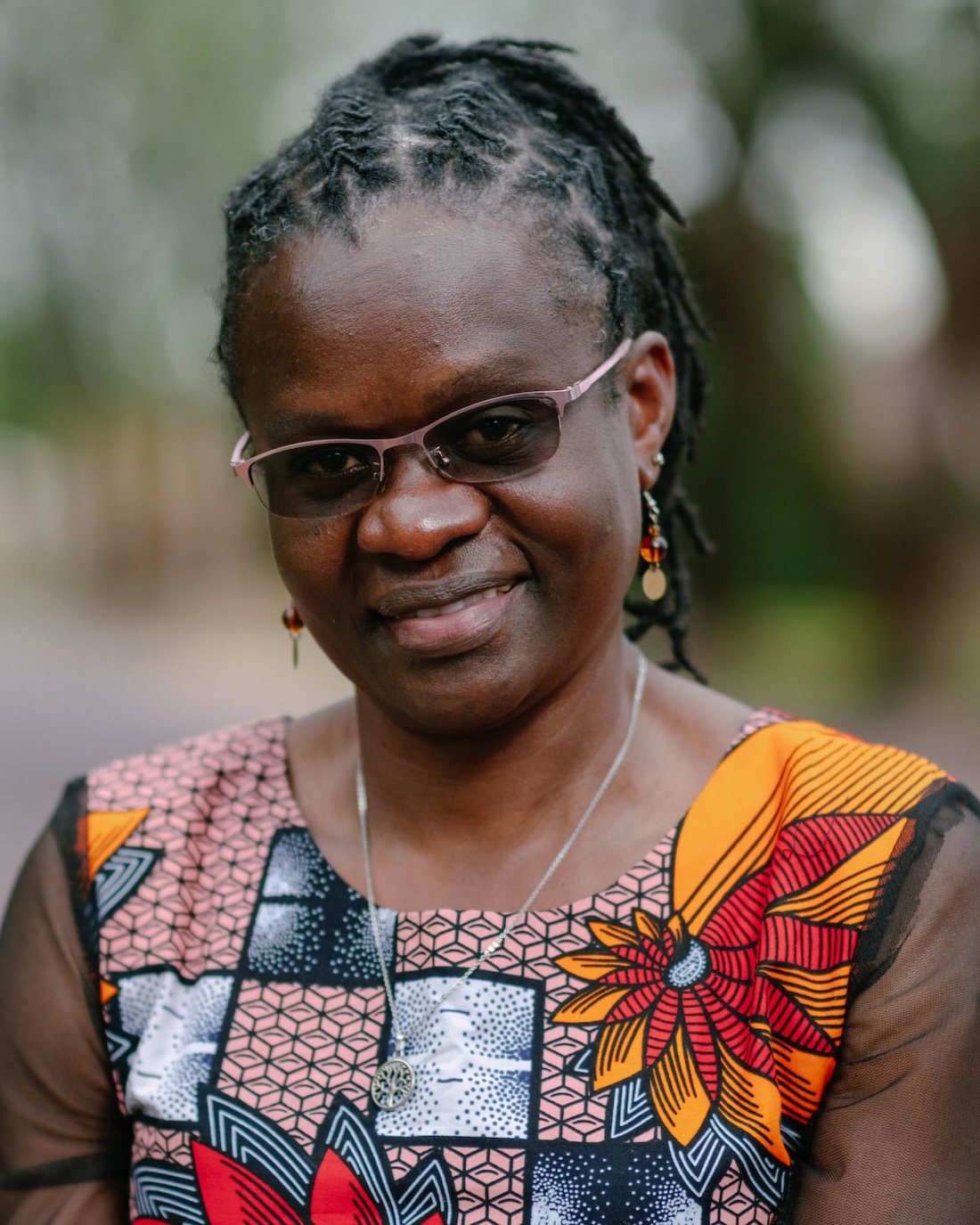
I met Juliana Auma Okoth last year, in November in Moshi, Tanzania, while preparing for the launch of an art and care project. We were introduced by a mutual friend and quickly became friends. Her life story impressed me so much that it became the direct inspiration for me to change my practice and set up *hadithi. And to start telling the story of health workers like Juliana who in her case works on disability advocacy.
So here’s the first episode of her story in which we find Juliana as a young single mother of a baby girl, Phoebe, who has spina bifida and hydrocephalus. It’s November 1994 and there’s not yet the easy access to the internet or ChatGPT to ask questions and learn what she is dealing with. In hindsight Juliana says she lived in denial.
Like so many young women she thought it was her fault that her baby was ill, that Phoebe’s disability was due to the fact she was conceived before marriage. Until Juliana takes Phoebe to the review clinic in Kjabe where she meets dr Bransford who explains to her what spina bifida entails and who gives her books and leaflets to read. This is how she comes to accept her daughter’s disability and know how to take care of her, how to catheterise her, and make her life better. This was also thanks to the shunt operation that considerably diminished Phoebe’s hydrocephalus when she was only four months old.
But there are other problems. Juliana left high school when she had to give birth and thus has no diploma. She therefore makes a living out of cleaning other people’s houses, cooking for large groups, doing their hair or dress making. At some point Phoebe however has to be operated again because one of her legs is longer than the other. After the operation she has to wear a cast for 6 months which makes both her and Juliana housebound.
Because she can’t leave the house to go working and earn a living, Juliana teaches herself how to make jewellery. Thanks again to dr Bransford she comes in contact with an American lady who takes her necklaces and earrings back to the States where she sells them. With the money she earns this way, Juliana is able to go back to school, 10 years after having Phoebe, and get a diploma after all.
When Phoebe is 9 years old she needs another operation, this time to correct her scoliosis through a spine fusion. In October 2002 Juliana founded the Spina Bifida and Hydrocephalus Association of Kenya (SHAK). The then President of IF (International Federation for Spina Bifida and Hydrocephalus), becomes aware of this through dr Bransford and advises that Juliana and Phoebe should attend the IF African workshop for parents of children with Hydrocephalus & Spina Bifida in Moshi and share their story. They subsequently attend all the following African workshops in East Africa, missing the ones in Uganda due to Juliana attending her final semester in college and later due to her 2nd pregnancy, this time of a healthy son, Joshua. Through attending all the other workshops she becomes more and more aware of disability rights and primary prevention through advocacy on food fortification.
As a pregnant young girl Juliana was given some yellow pills. As she recounts in an interview in Borgen Magazine: “But when I took them, they would make me vomit, so I threw them away. Later on, I learned that the yellow tablets were iron and folic acid. Even if I had been aware of folic acid, I couldn’t have believed that those small tablets would have a great impact on the life of an unborn child.”
As mentioned in the Borgen Magazine interview, Juliana has used her story as a launchpad for a life of service. SHAK, in collaboration with FFI, still works to raise awareness and promote food fortification in West Africa with the aim to prevent congenital disabilities, including Hydrocephalus and Spina Bifida (HSB), as well as other conditions like anemia and neural tube defects (NTDs).
This has had an enormous impact through amongst others mandatory flour fortification: this prevented 63,520 NTDs worldwide in 2022 alone. Although this means 174 healthier babies every day, this represents just 24% of cases that could have been prevented. There’s thus still the need for further work in the field and making the case for mandatory fortification. But as Juliana puts it, “Supplementation will never be enough… I threw away my folic acid. How many other women will? How many women know how early they need folic acid? But if you fortify their foods, they will consume their food and they will get their folic acid.”
These days Juliana is busy setting up her own NeuroCare Foundation for which she collaborates with her brother Joseph Onyango. NeuroCare promotes awareness, prevention and support of neurological health. In our partnership, we will work on projects that bring art and care together to benefit the foundation’s work.
Follow The Story of Juliana and our partnership with her NeuroCare Foundation by subscribing to our newsletter.
Portrait of Juliana by Daniil Zozulya